
Ind Tags
Ind. Tag reset behavior can now be chosen in Calculations
CET 17.0 adds a shared Ind. Tag reset behavior setting with three modes:
- Legacy reset behavior
- Part Number changes
- Part Number and Option changes
The setting is exposed from Calculations and backed by the shared cm.core.part settings API. Switching modes also converts existing user-modified Ind. Tags to the key format used by the selected mode, so a user override is not thrown away just because the reset rule changed.
cm.abstract.ifc
Kitchen & Bath edition only allows selection 1 floor for IFC import
IFC import only allows selecting 1 floor for import now when using the Kitchen & Bath edition. Also no floor is initially selected on import. Other editions (CI, MH) still allow importing multifloors for IFC (all floors selected by default).
cm.abstract.materialHandling
Easier override of hasRealConfig
In 16.5 Major we introduced MhSnapper.hasRealConfig() to determine if a snapper should own a non-temporary MhConfigRef and is treated as a "config owner" (see 16.5 Major migration guide "Changes to spread tools and dimension propagation"). In 17.0 Major you can now override the logic of this method through the MhConfigBehavior behavior.
public class MhSnapper extends Snapper {

    Old:
    /**
     * Check whether this snapper has config that is not temp.
     */
    extend public bool hasRealConfig() {
        if (config) return !config.temp;
        return false;
    }


    New:
    /**
     * Check whether this snapper has config that is not temp.
     */
    extend public bool hasRealConfig() {
        if (MhConfigBehavior b = configBehavior()) return b.hasRealConfig(this);
        return false;
    }
}


public class MhConfigBehavior extends MhBehavior {

    New:
    /**
     * Return true if this snapper hold a valid config.
     */
    extend public bool hasRealConfig(MhSnapper a) {
        if (MhConfigRef config = a.config) return !config.temp;
        return false;
    }
}
Preconfigurator better support for multiple compartments
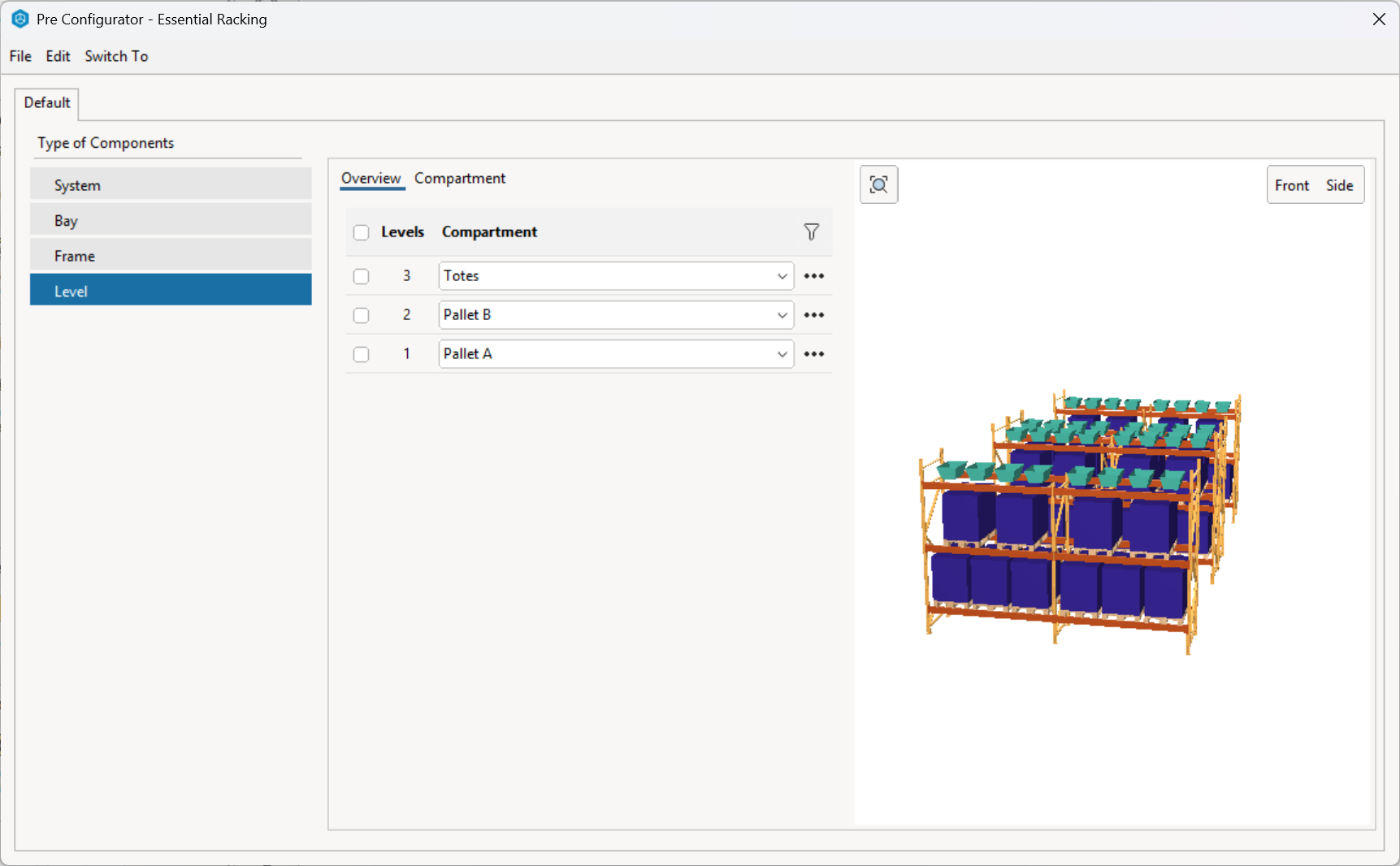
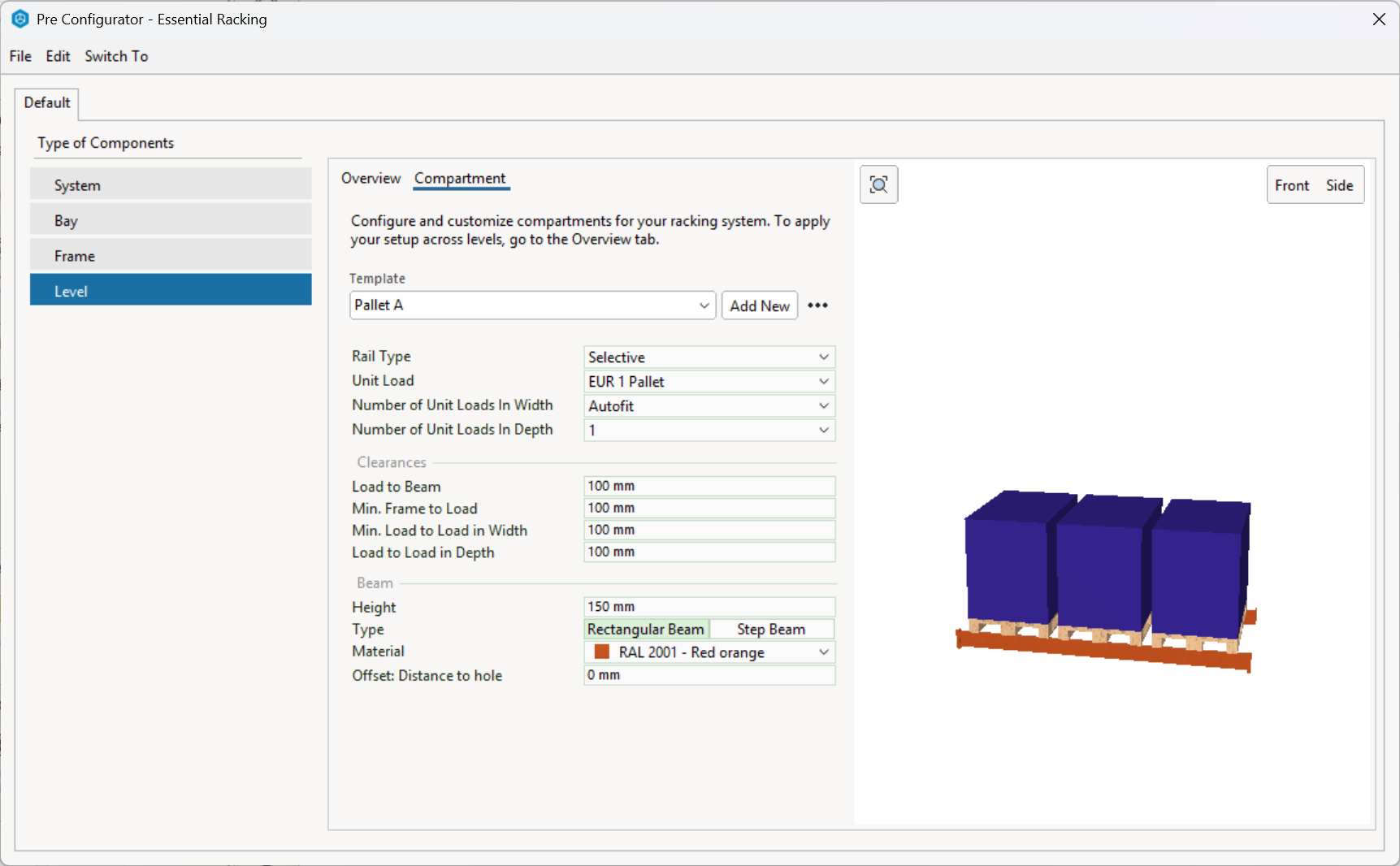
Previously the preconfigurator is built mainly to support having the same compartment throughout the entire system. We are now adding additional support to have different compartments within a single bay for the preconfigurator.
To use this new workflow, add the classes MhCompartmentOverviewConfigurationItem and MhCompartmentTypeConfigurationItem to your configuration. They do not work with MhCompartmentConfigurationItem.
Each level/compartment is represent by a MhCompartmentType object in the MhCompartmentOverviewConfigurationItem class. Unique MhCompartmentType objects can be created in the MhCompartmentTypeConfigurationItem class.
Interfaces to override:
public class MhStorageConfiguration extends MhSystemConfiguration {
    extend public str->Object compartmentCreationProps(Class compPropClass) {
}

public class MhCompartmentTypeConfigurationItem extends MhStorageConfigurationItem {
    extend public MhCompartmentType createCompartmentType() {
    extend public str defaultCompartmentTypeName() {
}

public class MhCompartmentType extends CorePropObj {
    extend public SubSet compartmentPropsClassDomain() { }
}
How the snappers get generated is MhStorageConfiguration has a method MhEngineConstructionEntryInfo[] levelCreationInfos() that returns a sequence of infos that each represent a level. This method is used in MhBaySpawner.entryLayout(MhEntryLayoutEnv env) to generate level entries based on those info objects.
public class MhStorageConfiguration extends MhSystemConfiguration {
    extend public MhEngineConstructionEntryInfo[] levelCreationInfos() {
}


public class MhBaySpawner extends MhStorageSpawner {
    public MhEntryLayout entryLayout(MhEntryLayoutEnv env) {
        ...
        MhEngineConstructionEntryInfo[] levelCreationInfos;
        if (?MhStorageConfiguration config = env.configuration) {
            levelCreationInfos = config.levelCreationInfos();
        }
        ...
    }
}
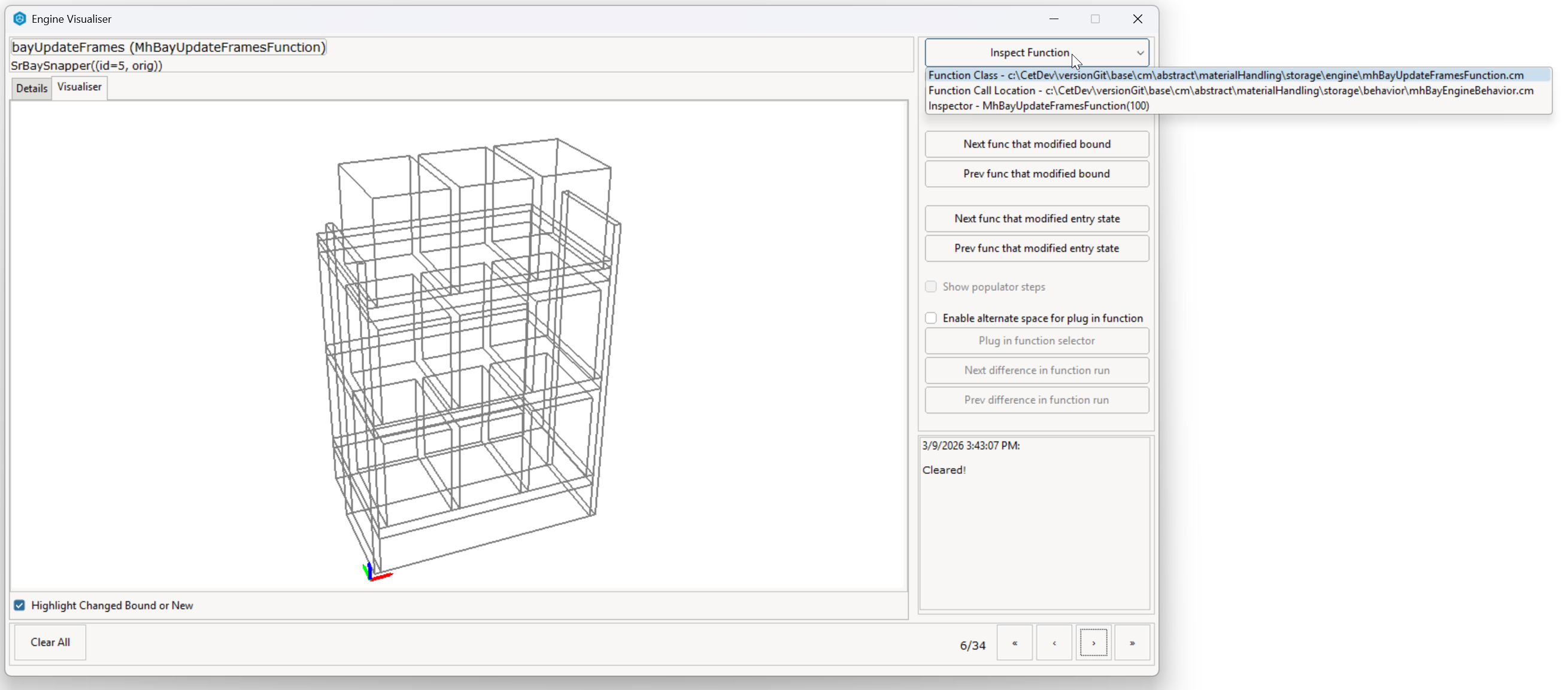
Engine visualiser easier function debug navigation
The engine visualiser now has a new button that will allow you to do one of three actions. You can open the function class in your editor, open the function call location in your editor, or inspect the function object.
cm.abstract.office
class AOElecNode
cm.abstract.office now exposes a small reusable node type for node-based electrical routing.
This is the office-side abstraction that the new custom.fika electrical system builds on.
Added: public const symbol cAOElecPathPurpose = #path;
Added: public const symbol cAOElecJumperPurpose = #jumper;
Added: public const symbol cAOElecInternalPurpose = #internal;
Added: public class AOElecNode extends AStarNode
AOElecNode gives implementations a shared node owner/key/position/rotation model while leaving neighbor lookup, path shaping, and routing rules to package-specific subclasses such as custom.fika.office.FOElecNode.
cm.abstract.part
New Ind. Tag hooks for row adjustments and legacy adjustment migration
cm.abstract.part now registers two public hooks to support the new 17.0 Ind. Tag system in Calculations and when loading older drawings.
Added: public void indTagAdjustmentHook(PartRowAdjustmentDialog dialog, PartColumnAdjustment adjustment)
Added: public Part[] fixCET17Adjustments(Part[] list)
cm.abstract.part.import
New ProdPart import environments
cm.abstract.part.import is a new package in CET 17.0. It adds ProdPart-specific importer environments on top of the shared framework in cm.core.part.import.
Added: public class ProdPartSIFImporterEnv
Added: public class ProdPartPMXImporterEnv
Added: public class ProdPartOFDAImporterEnv
cm.abstract.pmx
PMX export now writes more project-level information
PMXExporter still lives in cm.abstract.pmx, but in 17.0 it now writes the richer PMX header/project payload exposed from the new shared PMX core layer.
Added effective export usage: public class NotesTable
Added effective export usage: public class OrderInformation
Added effective export usage: public class ShipToInformation
Added effective export usage: public class SoldToInformation
The exporter now initializes those records from ProjectInfo and inserts them through Database before item rows are written.
cm.abstract.unitLoad
Stacked unit load.
To support the representation of stacking loads on palletized unit loads, a new class named UnitLoadStackedPallet will be introduced. This class will serve as the new base class for pallet-related functionality. Consequently, all existing pallet classes will be refactored to inherit from UnitLoadStackedPallet instead of their current parent class. This enhancement ensures a consistent and extensible model for managing stack patterns and load behaviors on pallets. This currently only available for certain CET edition.
    Old: public class MhCustomPallet extends UnitLoadPallet
    New: public class MhCustomPallet extends UnitLoadStackedPallet

    Old: public class MhSysPallet extends UnitLoadPallet : abstract
    New: public class MhSysPallet extends UnitLoadStackedPallet : abstract
cm.core
cm.core
Check Drawing callback
cm.core.invalidListCB() has been added as a public helper for opening the drawing validation dialog from shared UI or package code.
Added: public void invalidListCB()
cm.core.material
Added HoleTexturePattern class to core
This is a the same class as the TexturePattern class found in custom.cdMH.textureCreator. It intended that this class should be used in stead of the TexturePattern class or any of the othere classes that have reimplemeted the TexturePattern class.
To migrate to this class just changing thing the your class inheritance from TexturePattern to HoleTexturePattern should be enough.
For classes that have reimplemeted TexturePattern having that class inherit HoleTexturePattern and doing some minor refacturing so it only extend the shape method should in most case be enough.
cm.core.part
New Ind. Tag reset settings API
CET 17.0 adds a shared settings API in cm.core.part.partSettings.cm for the new Ind. Tag reset modes exposed from Calculations.
Added: public const str cIndTagPNOnlyKey = "indTagPNOnly";
Added: public const str cLegacyIndTagsKey = "legacyIndTags";
Added: public const str cIndTagsPNOptsKey = "indTagsPNOpts";

Added: public bool indTagsPNOnly() {}
Added: public bool indTagsIncludeOptions() {}
Added: public void setIndTagsPNOnly(bool value) {}
Added: public void setIndTagsIncOpts(bool value) {}
Added: public void setIndTagResetbehavior(str keyToMoveTo, World world=null) {}
Added: public void convertItemTagInfo(World world) {}
New helpers for user-modified Ind. Tags
Added: final public ItemTagInfo getUserItemTagInfo() {}
Added: extend public bool isUsrModItemTagInfo(ItemTagInfo info=null) {}
Added: extend public str itemTagText() {}
Added: extend public str itemTagsKey() {}
Added: extend public str legacyItemTagKey() {}
Changed/important usage: extend public ItemTag getItemTagForMigration() {}
Added: public str legacyFinalFlattenableKey(Part part) {}
Added: public str legacyPartToOwnerKey(Part part) {}
New centralized storage for user-modified Ind. Tags
userTagInfoHolder.cm introduces a snapper-centered store for user-modified ItemTagInfo objects. This is the new location used to preserve and restore explicit Ind. Tag overrides instead of depending on pure key matching against globally cached modifications.
Added: public const str cUserTagInfoHolder = "userTagHolder";
Added: public const str cItemTagInfoDelim = ":::";
Added: public class UserTagInfoHolder
Added: public UserTagInfoHolder getUserInfoHolder(PropObj obj)
Added: public void putUserTagInfo(PropObj obj, str key, ItemTagInfo info)
Added: public void removeUserTagInfo(PropObj obj, str key)
Added: public void clearUserTagInfo(PropObj obj, bool remove=false)
New helper for part annotation migration
PartAnnotationMigrator is the new load-time helper that moves old AN/AD part annotations from pre-17.0 keys to the part's current sourceId().
Added: public class PartAnnotationMigrator
Added: public bool pendingMigration
Added: public str{} migrated
Added: public Version version
Added: extend public void migrateAnnotations(PropObj s, Part part)
Added: extend public void migrateAnnotationsToSourceId(PropObj s, Part part)
cm.core.part.import
New reusable part import framework
cm.core.part.import is a new package in CET 17.0. It introduces a shared importer framework for reading Part data from SIF, PMX, and OFDA XML files.
Added: public class PartImporter
Added: public class PartImporterEnv
Added: public class PartSIFImporter
Added: public class PartPMXImporter
Added: public class PartOFDAImporter
Added: public class PartSIFImporterEnv
Added: public class PartPMXImporterEnv
Added: public class PartOFDAImporterEnv
Added: public class PMXFilePartSource
cm.core.pmx
New shared PMX core package
CET 17.0 introduces cm.core.pmx as the shared home for PMX database wrappers, PMX data-definition objects, PMX constants, and the underlying .NET bridge helpers that are used by both export and import flows.
New PMX project metadata objects and database insertions
The new package also adds first-class support for PMX project header/party records beyond the existing item and option rows.
Added: public class NotesTable
Added: public class OrderInformation
Added: public class ShipToInformation
Added: public class SoldToInformation

Added: final public int64 insertNotesInfo(NotesTable in_notesInfo)
Added: final public int insertOrderInformation(OrderInformation in_orderInfo)
Added: final public int insertShipToInformation(ShipToInformation in_shipToInfo)
Added: final public int insertSoldToInformation(SoldToInformation in_soldToInfo)
cm.test.cmunit.testInstructions
class DoFeatureSearchInstruction
Performs a feature search for the given search line and arguments and stores the result on the blackboard.
class ValidateFeatureSearchInstruction
Checks that a feature search result from the blackboard has found the expected feature.
class SetGraphicalSnappingInstruction
Sets the global graphical snapping, for example to 'all', 'basicPoint', 'custom', or a specific feature. By default, all InstructionTestCases set graphical snapping to 'all', allowing snapping to any type of feature.
cm.win
For developers: It is now possible to add additional catalog information in the View Source dialog.
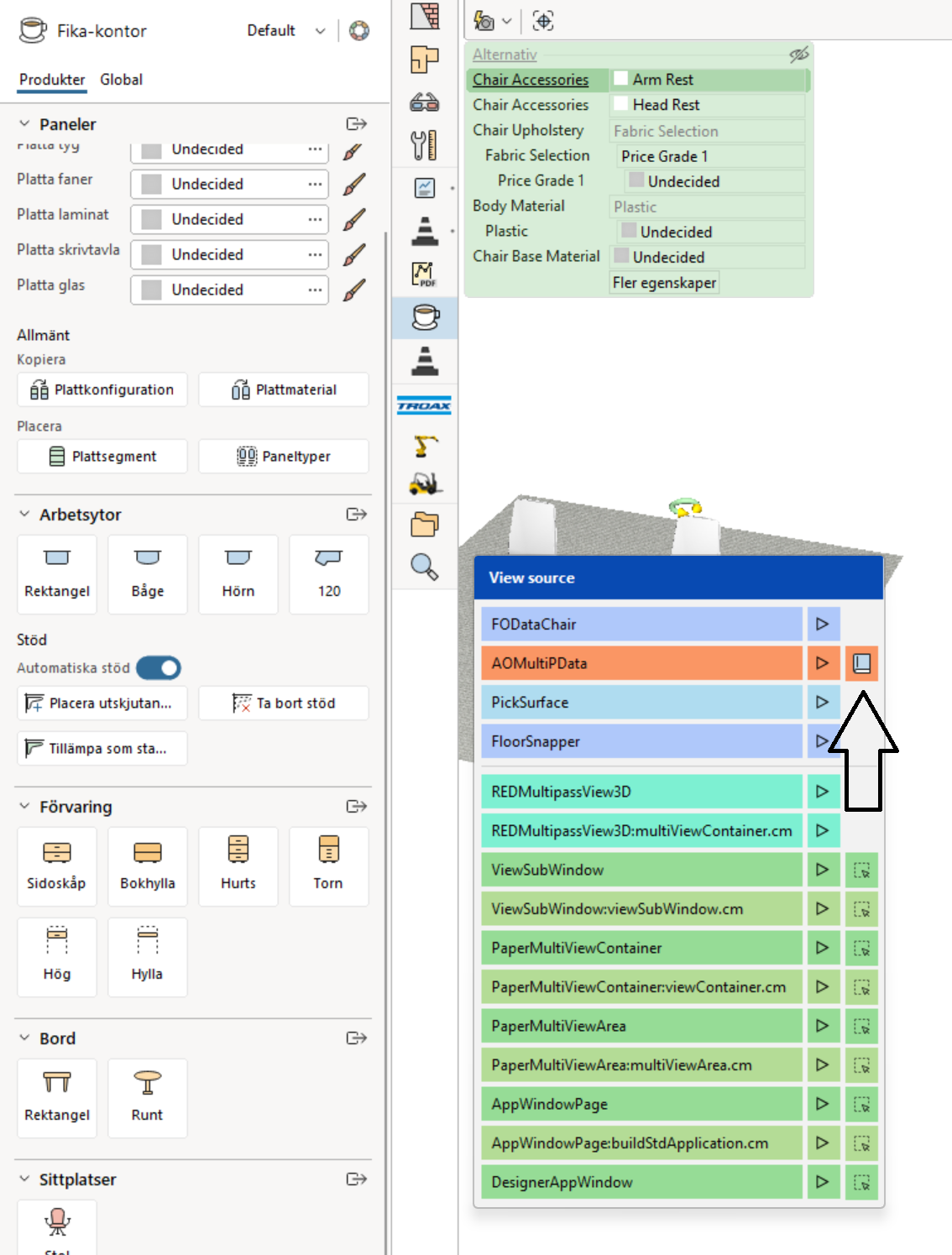
See changes to invokeViewSource() for how to enable it for more snappers.
custom.fika
New package-specific migrator example
custom.fika now includes a concrete 17.0 migrator example for packages with older custom part-special key histories.
Added: public class FikaDsPartSpecialMigrator extends DsPartSpecialMigrator
Added/important usage: PartSpecialMigrator "partSpecialMigrator"
Added/important usage: public str legacyItemTagKey()